

Ex-Dividend Date Defined and Why It Matters
Ex-dividend date meaning
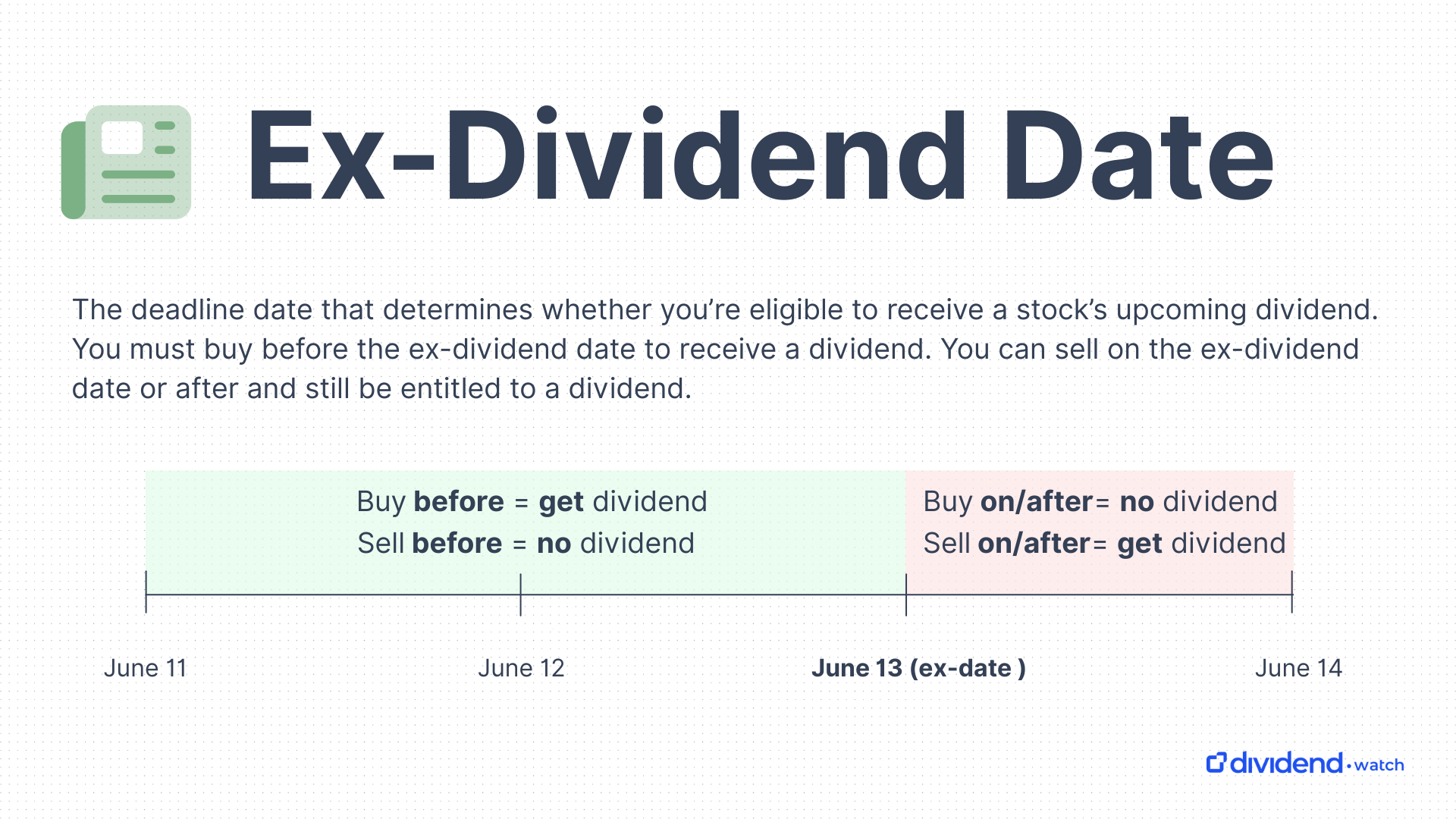
The ex-dividend date is the deadline that determines whether you’re eligible to receive a stock’s upcoming dividend. You must buy stock before the ex-dividend date to receive the dividend, though you can sell it on the ex-dividend date or after and still be entitled to the dividend.
Why does it matter? Because dividends are real money paid to shareholders, typically every quarter. Understanding the ex-dividend date can help you avoid buying too late and missing out.
Ex-dividend date example
Let’s look at a real-life example using a historical Coca-Cola (KO) dividend:
- Ex-dividend date: June 13, 2025
- Record date: June 13, 2025
- Payment date: July 1, 2025
- Amount: $0.51 per share
To earn the $0.51 per share dividend, you must buy Coca-Cola stock by market close on June 12 to be a holder of record on the June 13 deadline. Buying on the ex-dividend date of June 13 or later? No dividend.
This timeline gives your trade time to settle and your name to appear on the company’s books by the record date. US stocks now settle on a T+1 basis, meaning one business day after the trade.
How soon after the ex-date can you sell and still get the dividend?
You can sell the stock on or after the ex-dividend date and still receive the dividend. Some investors are surprised by this.
As long as you bought before the ex-dividend date and held the stock through that day, the dividend is yours, even if you sell it on the ex-dividend date.
Effect on stock prices and options
On the ex-dividend date, the stock price usually drops by roughly the dividend amount, holding all other market factors constant. This outcome reflects that buyers on or after that date won’t receive the upcoming payout.
This price adjustment can impact options pricing in several ways. Call options may lose value as the stock price drops when it trades without the dividend. Put options may gain value for the same reason.
Options traders should also consider early exercise, especially if they hold in-the-money calls just before the ex-date. Exercising a call option early allows the investor to take ownership of the stock before it goes ex-dividend, ensuring they receive the upcoming payout.
Other dividend dates to know
Our dividend dates guide provides more detail on the four important dates that dividend investors should be aware of. Regardless, here’s a brief overview of important ones investors should know.
Ex-dividend date vs record date
These ex-dividend and record dates are often confused since they used to be different when stocks had a T+3 settlement. However, due to the T+1 settlement, the ex-dividend date and record date are the same, as stocks settle on the same date when bought one day before going ex-dividend.
Declaration date
The date a company announces a dividend, including the amount and the dates to be aware of. It sets everything in motion.
Payment date
The day you actually receive the dividend in your account.
Do ETFs and mutual fund ex-dividend dates differ?
Like with individual stocks, you need to buy mutual fund or ETF shares at least one day before the ex-dividend date to earn the next distribution.
However, some mutual funds don’t follow T+1 settlement rules, meaning their ex-dividend and record dates will differ. ETFs follow T+1 settlement rules, just like stocks, so the ex-dividend and record dates are the same.
How to find ex-dividend date details
You can find ex-dividend details in several ways inside Dividend Watch.
Firstly, all covered stocks and ETFs have a dedicated quotes page where you can find historical dividend details.
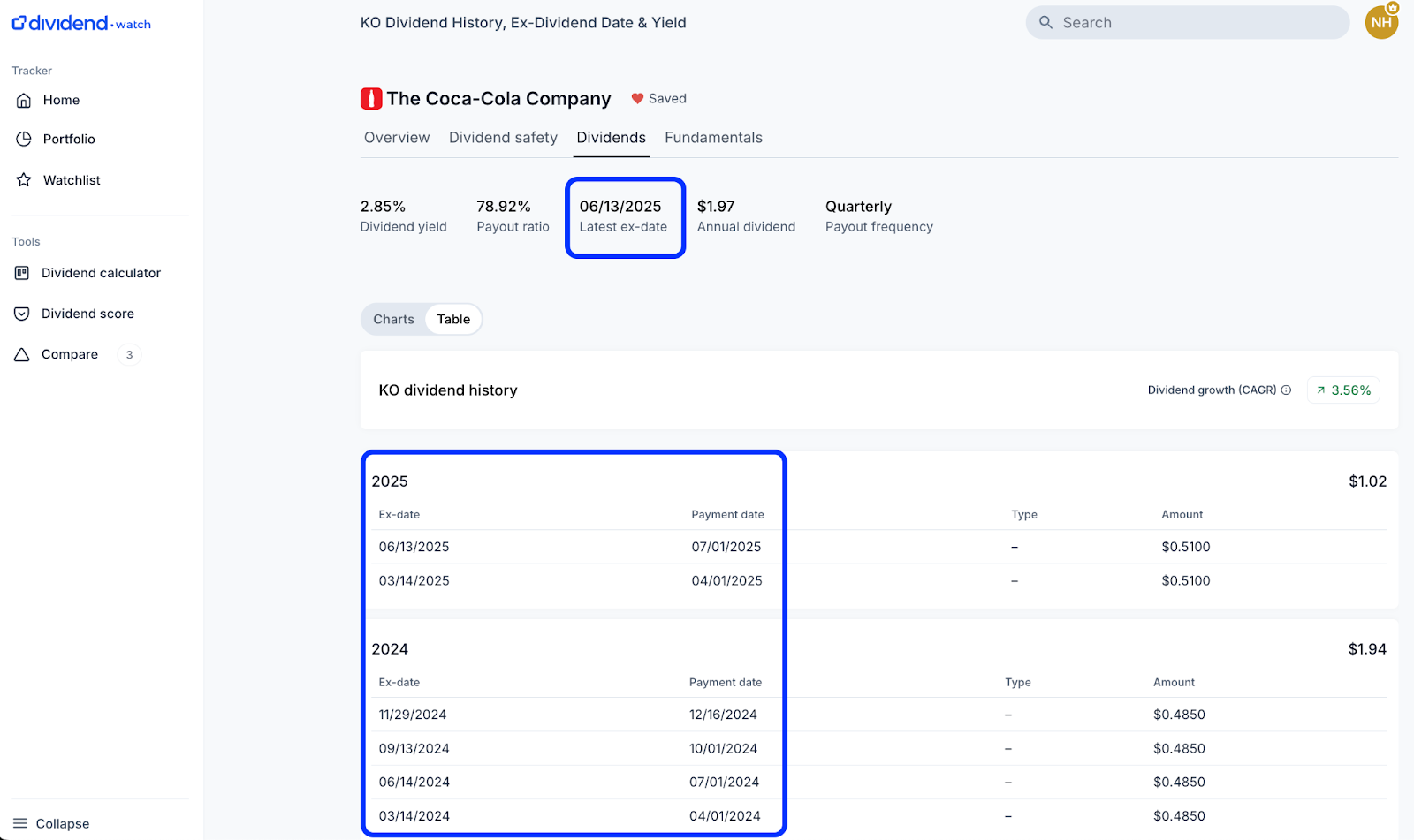
Source: Dividend Watch
Inside the portfolio tracker, you can view dividend insights based on your portfolio holdings, including in a detailed monthly view or within a daily calendar-based view.
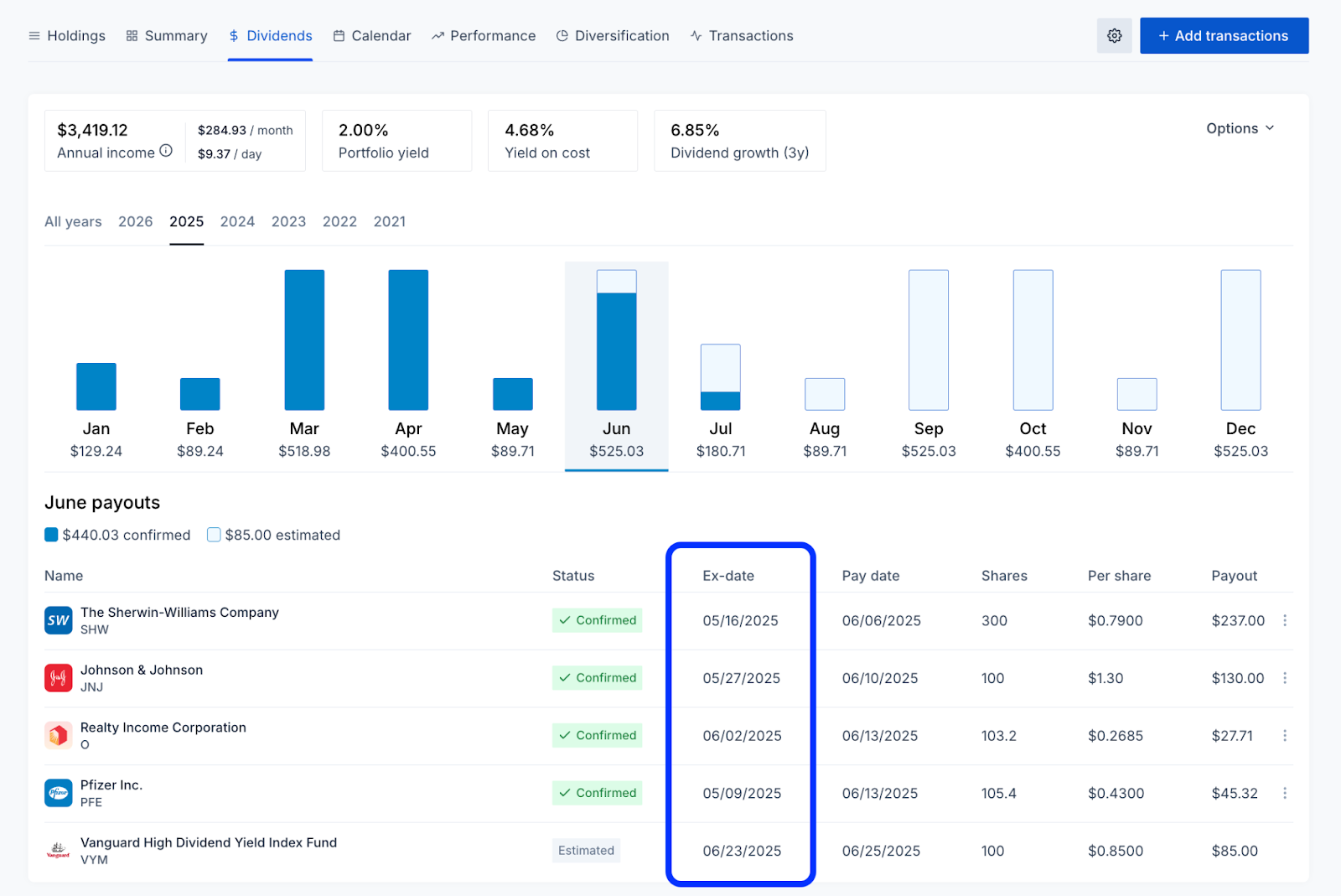
Source: Dividend Watch


