

Understanding Dividend Dates: What Every Investor Should Know
Timing matters in dividend investing. Whether you’re building a portfolio for income or simply want to ensure you’re capturing your fair share of payouts, knowing the key dividend dates is essential. While it might seem like a dry technicality at first glance, these dates determine whether you're on the receiving end of that next dividend or watching it pass you by.
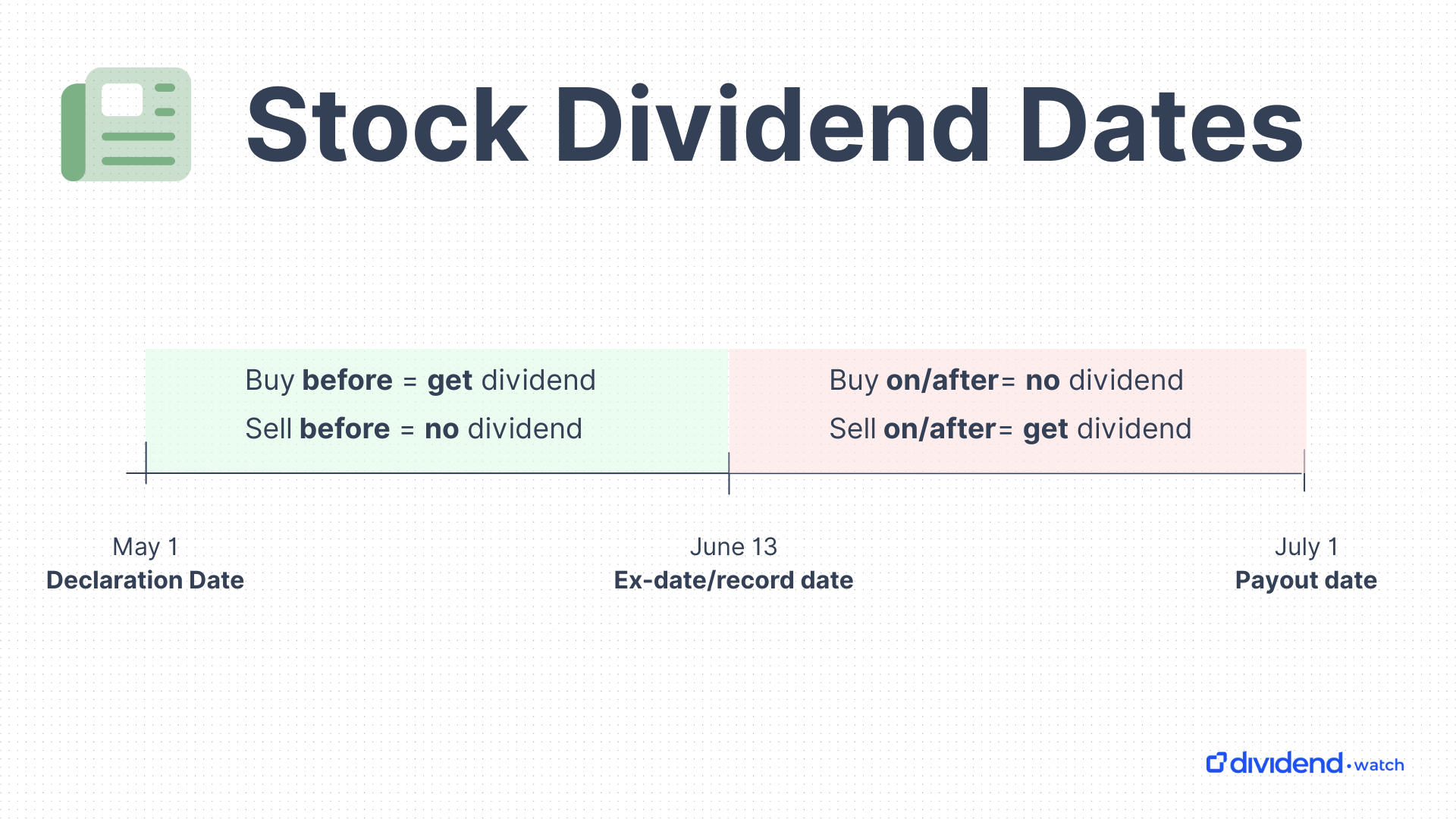
Let’s break down each date, how they interact, and how to use them to your advantage. Throughout this guide, we’ll use a historical Coca-Cola (KO) stock dividend as an example, including the following date details: declaration (May 1, 2025), ex-dividend date (June 13, 2025), record date (June 13, 2025), and payment date (July 1, 2025).
Declaration date
The declaration date is when a company’s board of directors announces an upcoming dividend. This announcement includes details on the size of the dividend and various other dividend date details. It’s the company’s formal commitment to pay shareholders a portion of its profits.
Ex-dividend date (most important)
The ex-dividend date is a crucial date for investors. To receive the upcoming dividend, you must purchase the stock before this date. You're not entitled to the dividend if you buy on or after the ex-date.
Using the Coca-Cola stock example, the ex-date for that dividend was June 13, 2025. That means anyone who bought Coca-Cola stock on or after June 13 missed out. But you'd have pocketed the dividend if you bought shares by June 12.
On the morning of the ex-date, the stock typically drops in price by the dividend amount, holding all other market pricing factors constant. This price adjustment reflects the fact that new buyers are no longer entitled to the payout.
Record date
The record date is the date when a company checks its shareholder list to determine who will receive the dividend. Due to the trade settlement timing discussed shortly below, the record date is the same as the ex-date for stocks and ETFs.
In the Coca-Cola stock example, the record date was June 13, 2025. Shareholders on record at that time received the dividend.
Payment date
The payment date is the day the dividend is actually paid to shareholders, most commonly as a direct deposit into a brokerage account. In Coca-Cola’s case, the payment date was July 1, 2025.
It’s the least complicated date in the cycle, but it’s the one investors look forward to most because it’s when investors pocket the dividend. Think of it as money you earned without lifting a finger, a little reward after getting your money to work for you.
Dividend dates and settlement
Behind the scenes, stock trades don’t settle instantly. In the US, the standard is T+1 settlement, which means the trade settles and your name appears on the company’s shareholder list one trading day after purchasing shares.
This rule is why the ex-date is the same as the record date for stocks and ETFs. It gives trades enough time to settle, so the buyer becomes the official shareholder by the deadline.
As a result of moving to T+1 settlement in May 2024, ex-dates and record dates are now the same day. When stocks were traded on T+3 settlement, the two dates differed.
When to buy and sell to receive a dividend
To receive a dividend, you must:
- Buy the stock before the ex-date.
- You can then sell on the ex-date or after and still earn the dividend.
It’s a common misconception that you need to hold a stock through the payment date. As long as you were a shareholder before the ex-date and held through it, you’ll receive the dividend, even if you sell the next day.
Where to find dividend date details
Dividend dates are typically published in company press releases and investor relations pages. But tracking them manually can be tedious.
That’s why platforms like Dividend Watch make it easier. Dividend Watch offers a personalized dividend calendar tailored to your portfolio holdings. You’ll see upcoming ex-dates, payment dates, and estimated future payouts.
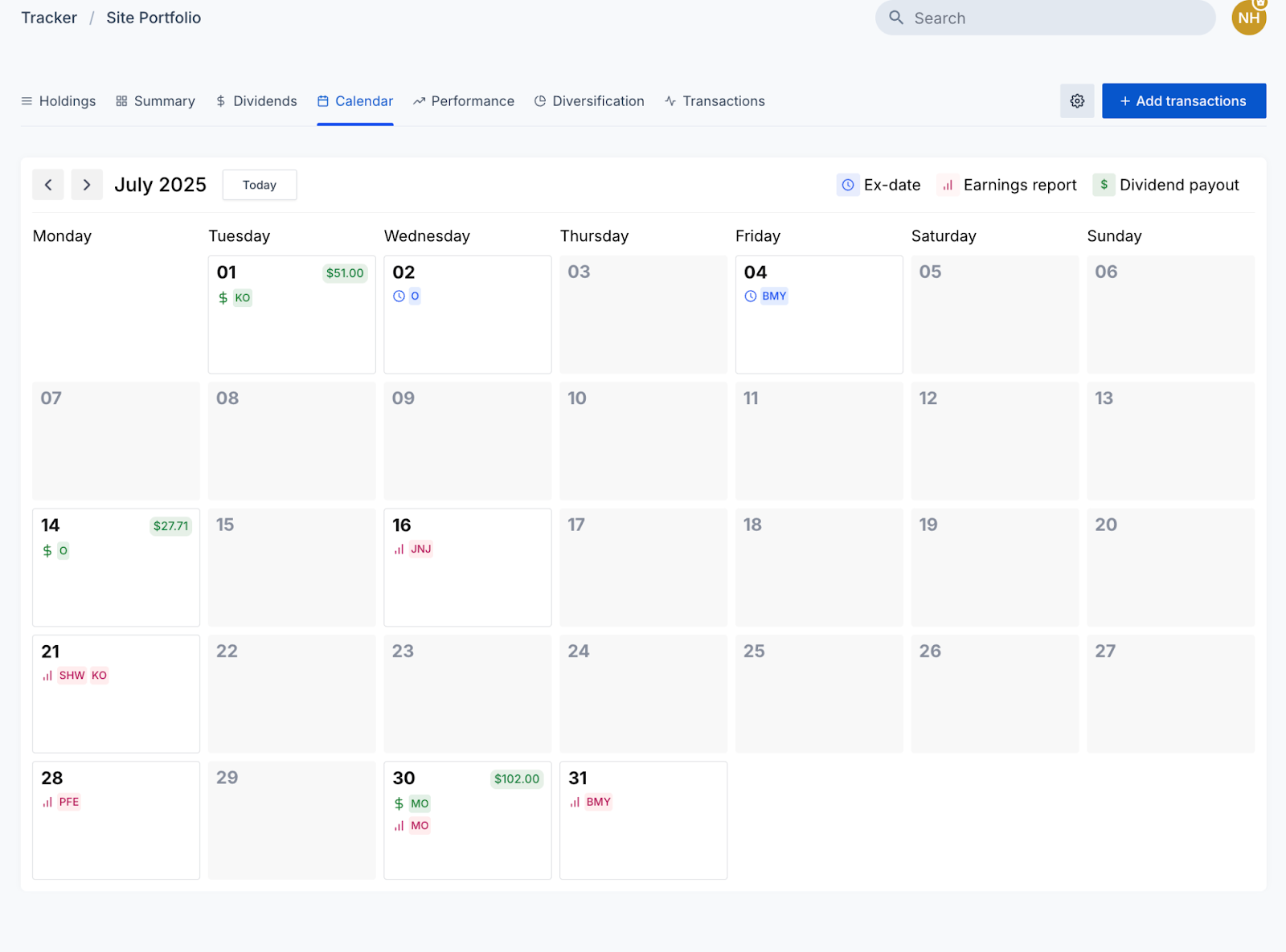
The Dividend Watch calendar features includes confirmed and estimated ex-dates and payment dates for stocks in your portfolio. Source: Dividend Watch
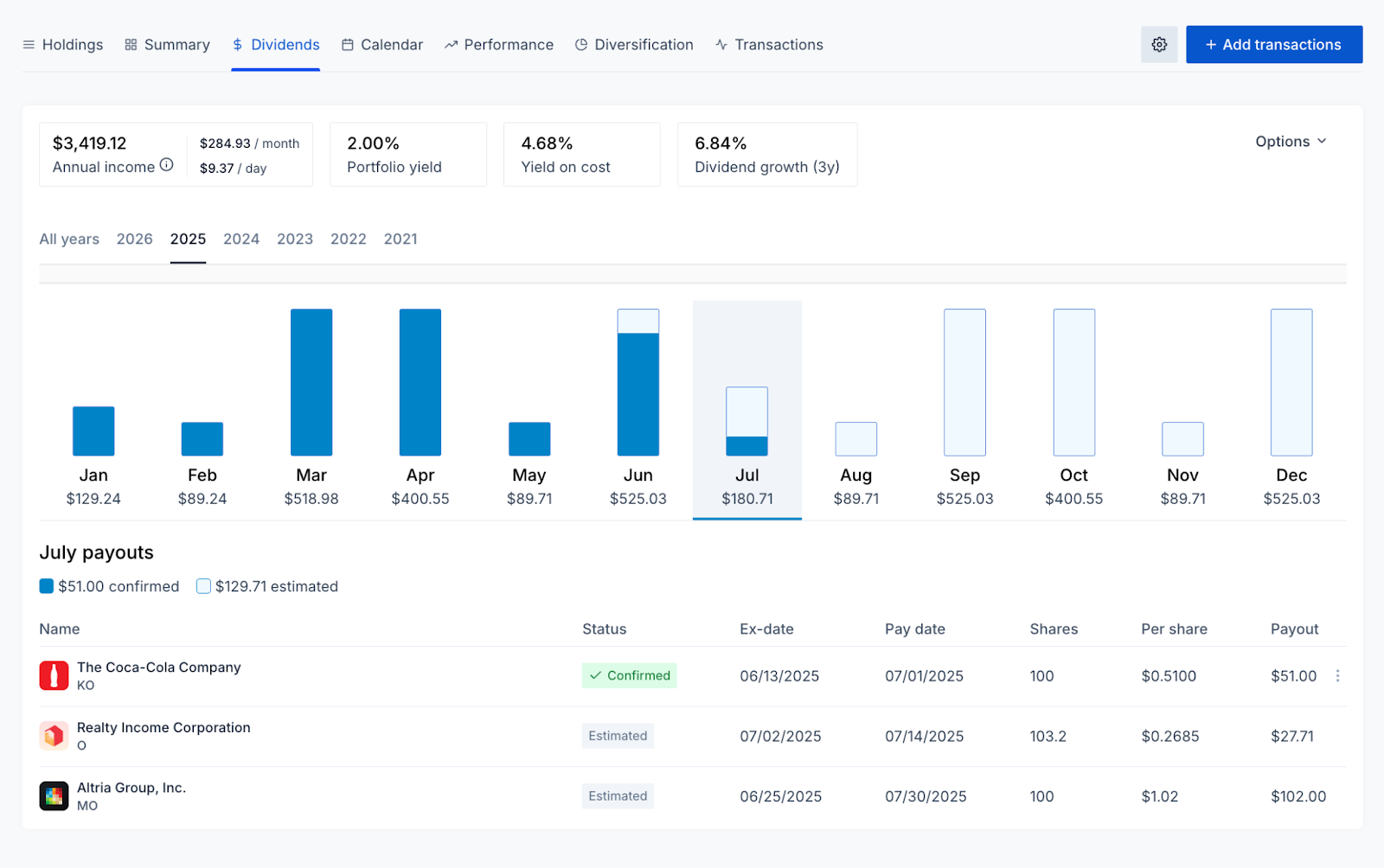
View dividend dates, historical payouts, and estimated future dividend dates and payments for all of your portfolio holdings inside Dividend Watch. Source: Dividend Watch
How dividend dates affect options
Dividend dates can also impact options trading. When a stock goes ex-dividend, its price typically decreases by the amount of the dividend. This event affects the pricing of call and put options.
For example, call options may lose value due to the underlying stock price declining on the ex-date. Put options may increase in value for the same reason.
Options traders need to factor in the timing of dividends when planning trades. In some cases, exercising call options early is advantageous.
Special dividends and ex-dates
If a company declares a special dividend, typically 25% or more of its stock price, standard ex-date rules don’t apply. Instead, the ex-date for special dividends is set after the payment date. These situations can cause more dramatic price swings and even trigger due bills, obligating sellers to pass along the dividend to the buyer.
FAQ
How many dividend dates are there?
There are four dividend dates, but the ex-date and payment date are the two most important dates for investors.
- Declaration date: When the company announces the dividend.
- Ex-dividend date: The cutoff to be eligible for the dividend. Investors aren’t entitled to the dividend when buying shares on the ex-date, rather, they must buy before the market closes on the previous trading day.
- Record date: The date on which the company finalizes the dividend recipients, typically the same day as the ex-date, with T+1 settlement.
- Payment date: The date on which the dividend is actually paid to shareholders.


